Back in the viola section saddle...
A vow broken.

For Jeff Stehr.
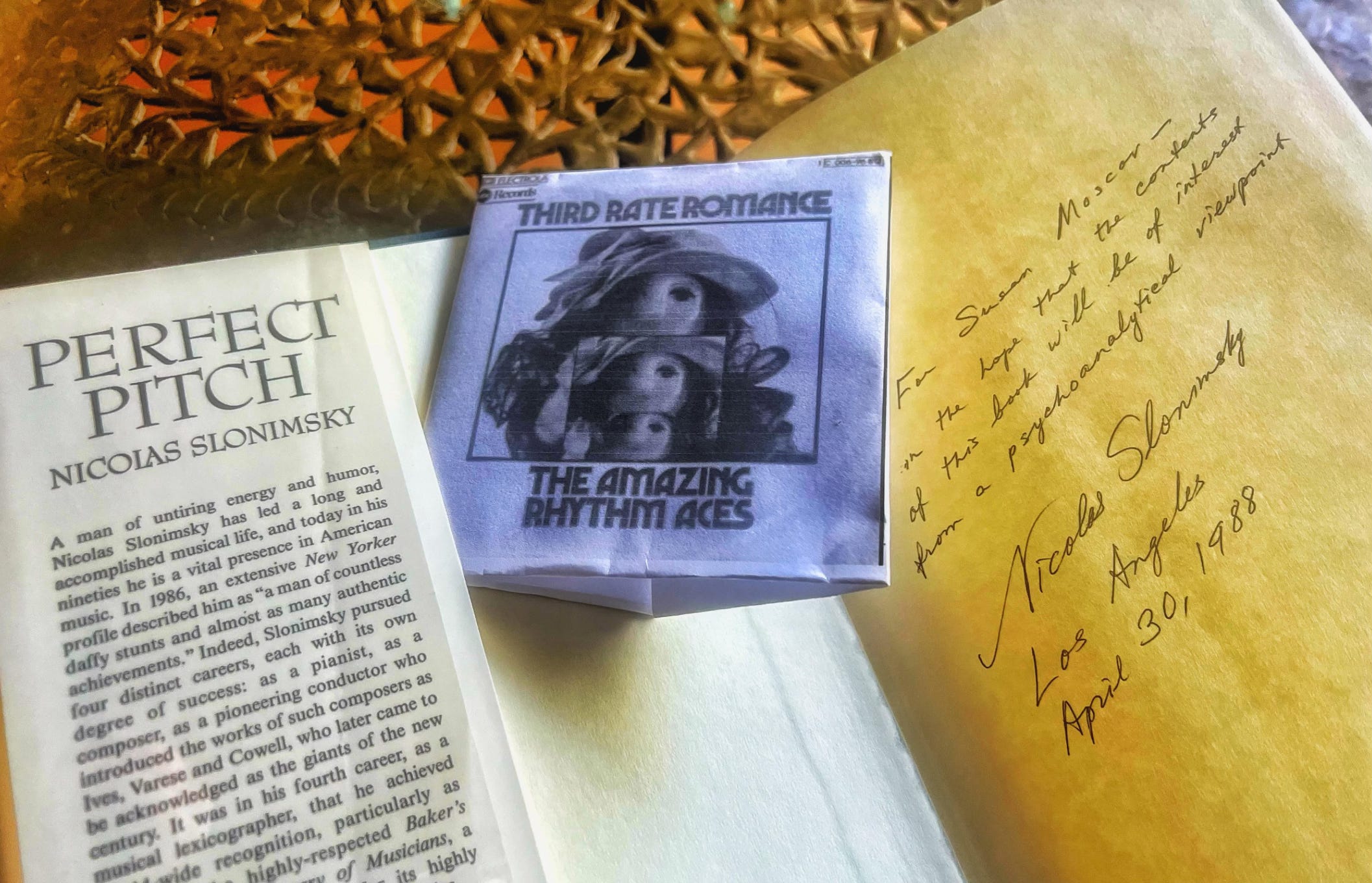
In the first place, God made idiots. That was for practice. Then he made school boards.
Mark Twain
*******************************
Since I have friends on a nearby school board who do good work, I’ve revised Twain’s barb and aimed it to a more deserving population:
“In the first place, God made criminals. That was for practice. Then he made Orchestra Conductors.”
An immediate caveat. By “orchestra conductors” I don’t mean those who work in school settings and teach. Conductors who do that follow a noble calling. The crew I have in mind are the ones who lead professional symphonies in large cities; those egoists that have the gall to stand up in front of a group of people (who are by and large more musically adept and knowledgeable than their director but not paid as much) and tell them what to do. This is more than chutzpah. It is a crime. And to get a salary for it; often a handsome one? A scandal and scam. Where do I sign up?
Harbouring such a prejudice, it’s best for all involved that many years ago I separated myself from paying orchestras. What led to this sudden and dramatic breakup makes for a curious story. It might also be of interest from Slonimsky’s “psychoanalytic viewpoint” for the inquisitive. If nothing else, putting it down will be a therapudic exercise for the narrator, as it may purge from my consumed mind a nest of pesky demons that have recently sparked off in me some peculiar behaviours. These practices have now begun to intrude and meddle not only with my domestic life, but with my social one (such that it is). Invitations to jollifications that formerly flowed into the mailbox once in the course of an epoch now arrived once every two epochs. Could this be because word of my eccentric episodes has gotten around to my circle? It wouldn’t surprise me. News travels fast around here.
Who wants to share bon mots with a citizen who, when he spies a pair of Florsheim shoes at a party, gets agitated, takes refuge behind the sofa, assumes the penitential and contorted posture of Saint Simeon Stylites (c. 390–459) and cries out faint hymns to a deity who has long since heard enough? That more or less describes my behaviour at gallery openings.
So here’s the low-down as best I remember it. The roots of my symphony-disillusionment and terror of Florsheim shoes were planted in the counterpoints of my alto-psyche twenty-five years ago in a dismal suburb of the Cream City that, for reasons of diplomacy and politeness, will not be named. The drama was spun out on the stage of a college auditorium during the rehearsal of a piece of music that is marginally better, but not by much, than the Delius Requiem**. The best that can be said for it is that, unlike Delius’s miserable turgidity, Tchaikovsky’s Fourth Symphony has a tolerable piccolo solo in the third movement. (If Delius had include a piccolo part in his piece, it might have improved it…but it’s too late now.) If we had just played the notes to the Tchaikovsky with out any “fancy pants” things would have been copacetic. But the maestro of the moment had other ideas. He wanted to make a splash. To help in that regard, he concocted a spectacularly hideous idea to start the music. Maybe he thought that his plan would take him from the provincial place he found himself in and launch him into “the big leagues.” If the strategy worked, it shouldn’t have.
His choreography was this: he would stride across the stage with baton held forward and high in a fashion uncannily reminiscent of a fascist salute. During his creeping processional, the members of the Orchestra were instructed to surreptitiously raise their instruments into playing position. This was a good idea because there could be no way of telling when the down-beat might happen. Best to be prepared. We were ready for anything.
When near the podium, our leader would make a leap onto the elevated box in front of the ensemble. Although a four-foot jump would have been more impressive, in this case it was prudent for this particular specimen, who, if nothing else, seemed to have a finely honed sense of self-preservation (and appeared not to be in the best of shape to begin with) to postpone his jump until he was within two feet of his perch. The goal of this remarkable athleticism, it cannot be denied, did have an artistic bent and a vague relationship to music-making. But a dubious one. His acrobatics, so he strategised, would coordinate his landing with his downbeat. The smack of his shoes contacting the wood of the podium would be simultaneous with the descent of his baton. This percussive landing would also be the cue for the French Horn section to let the sheep out of the barn. Those magisterial A flats in the opening fanfare would sound out at exactly the instant of touchdown and the baton was at the lowest point of its predictably uncertain and unclear ictus.
Have you figured what commercial brand this high-jumper chose for footwear?
Florsheim wingtips (12 and a half -extra wides.)
What did this outlandish pantomime have to do with any reputable performance-practice of Tchaikovsky symphonies? Or any music for that matter? What would Richard Taruskin say? Thank God that that eminent musicologist who specialised in everything, but especially the history of 19th and 20th Century Russian music, died before he had to consider in his scholarly work such a musical travesty. Unfortunately, the orchestra (which happened to be alive at the time) did.
Life then took a turn from the absurd to the torturous. Although approaching competence with manipulating his baton, the gross motor skills of this particular maestro were lacking. Thus it was necessary for his musical gesture to be rehearsed in order to “get it down,” It took half an hour for every one involved to be on the same page and achieve anything close to rhythmic consanguinity.
For this I went to graduate school?
Towards the end of those thirty minutes I was in such a state that any moral compass I possessed had departed (making me still worse) and dispersed itself in the harmony of the spheres (which I flattered myself in thinking would make the spheres a little better but probably didn't). After the twenty-fourth repetition of his shtick, I found myself devoutly praying con passione that the flying fellow would miscalculate the distance to his seat, conk his head on the nearest hard object and need to be transported on a gurney to the nearest emergency room.
I had turned into a monster. It was time to quit playing in orchestras and consult Rabbi Twerski. Apparently maestros weren’t good for my soul.
I never got to the Rabbi, but despite that, the outcome of all of this was largely positive. For the next twenty years I turned my back on orchestral playing and took up new avenues in my life with music: namely participating in recreational string quartets, playing the viola da gamba out-of-tune with tolerant friends and most recently, and most exciting, discussing with my “roots and country band” new approaches to the interpretation of The Amazing Rhythm Aces big hit:
… you don’t look like my type but I guess you'll do
Third Rate Romance Low Rent Rendezvous.
To play the music you want to play with people you want to play it with is my definition of a happy musician. For the past two decades I have been often musically happy. That is far better than a third-rate rendezvous. It’s first -rate:
How could I voluntarily leave such an idyllic sonic tableau? Yet this coming Sunday I will. My long romance with a non-orchestral life will be over. The vow to never again sit in a viola section will be broken.
On Sunday at 5:00 pm I will attend an orchestra rehearsal and have a stand partner. What is the orchestra? It is, in my view, a significant, if not the most significant musical ensemble in the Milwaukee community. That is why I’m diving in.
It looks like my type of band. It will do.
Turn your Florsheims in to the nearest Goodwill . Turn your radio on.
Stay tuned.
**************************************************************************
I can’t wait to hear more!
I've never thought much about my general view of conductors, so your perspectives got me thinking. Thanks for the nudge. I've never played in a professional orchestra, but I've been on the board of several and sung in their choruses for 50+ years. My initial reaction is to divide the music directors into three roughly equal groups from a musical perspective: absolutely excellent, pluses and minuses, and grossly overrated misfits. Unfortunately, as people, some of the great musicians were jerks, and many were sexist in sick ways. But better than most politicians and billionaires, for sure. And like you, I'm finding my personal involvement is shifting to small groups. Long live early music consorts, and maybe I'll even get back to playing upright bass in a folk group. In any event, music is my favorite anchor in today's stormy world. Keep your unique thoughts coming!